


 Comments (0)
 3 min Read
By Shaharyar Technologies, May 22, 2026
Remember the times when you saw an advertisement and instantly forgot about it. Or visited a brand site and did not understand what it was doing. This issue is not because of their low-budget campaigns. It's about a lack of clarity.
Marketing often suffers when running a digital advertising agency, managing inside sales representatives, or scaling retail marketing across locations because they try to say too much to too many people in too many places at once. The result? Diluted messages, wasted spend, and audiences who never truly connect with what you offer.
This is the exact challenge that the 3-3-3 Rule aims to tackle.
In both B2B sales and consumer markets, consumers are exposed to thousands of brand messages every day. Attention is the most scarce resource in marketing now, and companies that succeed in reaching consumers aren't the ones with the largest budgets but the ones with the clearest message. And the 3-3-3 rule becomes the filter for every marketing process before it happens. Learn more about it!
What Is the 3-3-3 Rule in Marketing?
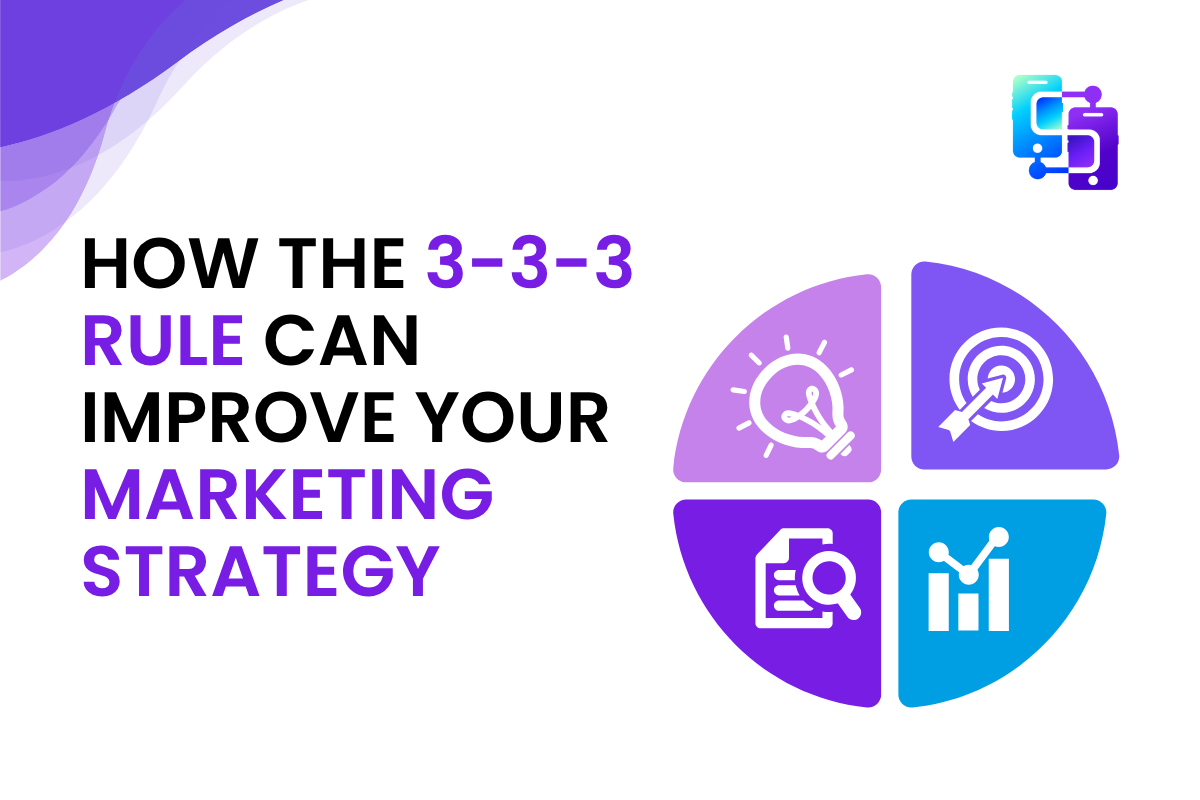
The 3-3-3 rule in marketing is a sales technique that makes companies emphasize three important messages, deliver them through three main channels or phases, and consistently repeat them throughout the process.
The aim behind such a rule is to make it easier to communicate a message and create a lasting impact on customers' minds. Have you ever looked at any campaign and felt as if everything was being said to everybody? Well, that is where the 3-3-3 marketing rule comes into play.
The Three Pillars of the Rule
1. Three Core Messages
Limit your messages to three key themes that capture the core of your message to your target market. These should reflect your main benefits, what makes you different, and how you solve your customers' problems. Keep each message simple, outcome-focused, and easy to repeat.
For a healthy snack brand, this might be: Tasty. Nutritious. Affordable. Three words that can anchor every headline, every caption, every ad across every format. Whether you're executing an SEO content marketing strategy or running a pay-per-click campaign, your three messages should stay identical.
2. Three Audience Segments
But what's the use of lead generation if you don't even know who your target market is? This is where the pillar comes into play. Target three groups with distinct needs or buying drivers. Define them using customer data or survey information. Make sure all these segments receive the same messaging, tailored to their unique issues.
For instance, in B2B sales, you could target three segments: CEO-level decision-makers, middle-level managers, and technology evaluators, who all need the same product story, only told in a completely unique way. Your first step in successful customer acquisition comes with three spears.
3. Three Marketing Channels
Focus on any 3 social channels where your potential clients will spend most of their time. Create balance by using one owned medium, such as email, one social medium, and one paid medium. By doing this, you avoid diluting your budget by being present on media channels that don’t contribute to your success.
The great thing about a dedicated digital advertising agency is that it won’t try to be everywhere all at once. The most successful ones choose their three channels and rule them. If your chosen channels include tools for digital marketing automation, PPC campaigns, and SEO content marketing, they should align perfectly with the chosen audience.
How Can You Improve Marketing Strategy With 3-3-3 Rule?
To apply this sales technique, you need to follow the proper instructions step by step. So, below is how you can use this rule.
Step 1: Audit everything you are currently saying about your brand. Distil it down. What are the three things you most want a customer to walk away remembering?
Step 2: Who are the three distinct groups your product serves? Give each a clear profile; demographics, goals, frustrations, and what they need to hear to take action.
Step 3: Where do your audiences actually spend time? Pick three and commit. A mix of paid, owned, and earned media is usually the most resilient combination.
Step 4: Every piece of content you create should serve at least one of your three messages, to at least one of your three audiences, on at least one of your three channels. If it does not fit, do not make it.
Step 5: When audiences see the same core ideas repeatedly, recall improves significantly. Review your three pillars quarterly and use your digital marketing tools (Ahrefs, Grammarly, and Hashtagai) to track what's working.
The Bottom Line
In marketing, complexity often masks confusion. The more complicated your plan, the harder it is to see what is working and what is not. The 3-3-3 rule (best sales technique) forces you to declutter your approach. Start with your next campaign. Before a single piece of content gets created or a single dollar gets spent, answer the three questions: What are our three messages? Who are our three audiences? What are our three channels? Build everything from there and watch your marketing become sharper, more consistent, and far more effective.
FAQ’s
What is the 5-5-5 Rule For Social Media?
It involves a quick 15-minute routine marketer can use daily. These 5-5-5 are defined as 5 posts, leave 5 thoughtful comments, and respond to 5 DM or posts.
What is the 70/20/10 rule in social media?
This rule helps brands balance their content to keep audiences engaged and increase their reach. The variation of this strategy is;
70% Value & Brand Building
20% Shared & Engaging Content
10% Promotional

 Aug 20, 2026


Leave A Comment